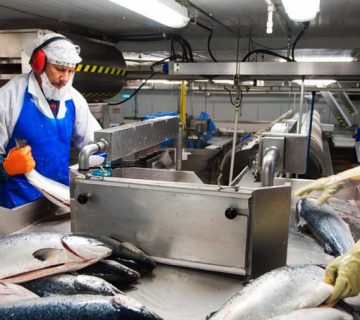


Technology and sustainable aquaculture
Currently, there is a bill in Congress called the AQUAA Act that would add baseline standards, regulations, and safeguards for offshore aquaculture in the U.S. (Aquaculture refers to the farming of fish and other aquatic organisms as opposed to catching them in the wild.) The use of the word “baseline” means the U.S. is far behind other countries that already have a central authority and strong policies to oversee the health and growth of farmed seafood.
There are enough crises in the world that sustainability in farmed fish may not seem important. As long as the fish reaches your store or restaurant, does it really matter where it came from and how it got there? Yes, it does.
The U.S. imports nearly 80% of its seafood and had a seafood trade deficit of about $17 billion in 2020. This is not sustainable. Health, jobs, standards, climate, as well as economic balance and food access are all at stake.
In the not-so-distant past, farmed fish were not very reputable. They were considered unhealthy fish in unhealthy water, of questionable quality, and at risk of parasites that could endanger wild fish populations. Meanwhile, indiscriminate and overfishing netted populations of endangered species along with those of interest. This destroyed vulnerable underwater ecosystems and deprived fish of places to reproduce. As a result, wild fish populations could not replenish themselves.
The wild-caught industry seized on its marketing opportunity and public education that longline fishing was the best option for consumers and the environment. This claim is largely true, with just one big problem: there is no way wild fish can maintain their vital habitat in our planet’s ecosystems while also feeding a rapidly growing population.
In fact, the United Nations released the State of Global Fisheries and Aquaculture (SOFIA) report in 2021. “More than 800 million people are currently hungry, and 2.4 billion have very limited access to enough food,” the report states. “…Feeding a growing population without depleting resources is a challenge that continues to grow.”
Consuming more food than we can regenerate is a simple calculation that doesn’t work well. This calculation doesn’t take into account the damage climate change is doing to native species and the internal linkages in the food chain. Storms, heat waves, fires, and disrupted growing seasons don’t directly affect the chain, but they do change the food you eat and how and at what cost you get it.
How technology can impact sustainable aquaculture
When we think about global food solutions, we come to the conclusion that sustainable aquaculture must fill this gap. It is the most efficient source of protein and the UN considers it essential to achieving its development goals.
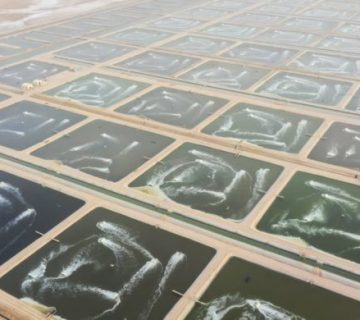
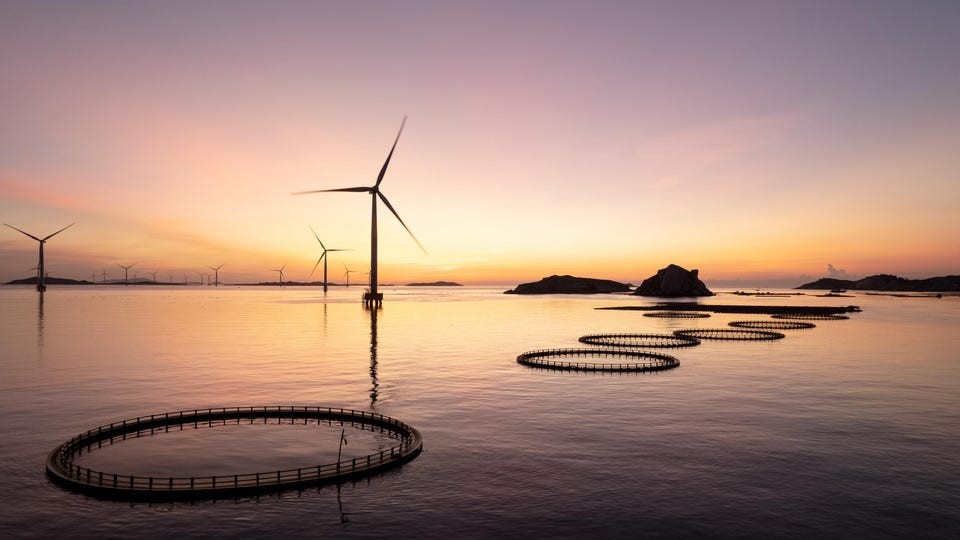
By “sustainable aquaculture,” I mean raising fish in large pens (98% water to 2% fish) that are monitored and managed to grow the healthiest fish possible while respecting the environment and climate. It also minimizes the need for treatment, waste generation, and contamination of wild fish populations. Healthier fish sell for a higher price, so farmers have an incentive to raise higher-quality fish because they earn more.
What needs to change to make these old industries better and more sustainable? Technology.
What made us use tractors instead of farming by hand, or weather satellites instead of looking at the sky, could also make aquaculture a more efficient and healthier industry. The best fish farms today are the epitome of the adage: “What can’t be monitored, can’t be managed.” Technology could revolutionize the industry, enabling farmers to:
Monitor and manage everything that happens below the surface
Get rid of the microplastics that pollute our oceans and disrupt the ecosystems that fish and humans depend on
Use AI, drones, and remotely operated vehicles (ROVs) to monitor and improve farming practices to promote health and sustainability