

There are signs that European exporters are distancing themselves from the Chinese market, according to interviews with a number of seafood executives at Seafood Barcelona 2022.
Port support issues due to tighter food safety inspections and the risk of a trade ban with China if products show signs of COVID-19 have some suppliers worried and deterred them from shipping to China. Others are seeing higher prices in the European market.
Demand from China for the company’s lobster product remains strong, but exports to China have been significantly reduced this year due to problems with Chinese port clearance, said Boris Mirchev, sales manager for Ocean Fresh Seafood in Halifax, Nova Scotia. Mirchev added that the company’s lobster mainly goes to buyers in the European Union, the United States and Canada. Domestic prices in North America are now better than in China. The situation in China is already extremely volatile, with 40 Chinese cities under various forms of lockdown due to the COVID-19 outbreak.
“We expect China to be the destination for 20 percent of our exports this year, compared to 50 percent and 60 percent last year and the year before that.”
Mirchev expects his company to return to the Chinese market in the long term. The company is monitoring China’s COVID and customs issues for signs of easing restrictions.
“There’s always demand there,” Mirchev said.
The COVID-19 lockdowns and restrictions on foodservice are hurting demand from China’s hotel/restaurant/catering (HORECA) sector, which plays a larger role in China’s overall seafood market than Europe, where retail is more influential. In addition to concerns about domestic buyer power, the country’s currency has also come under serious pressure in recent weeks. The Shanghai Composite Index fell more than 10% in the first quarter. Chinese policymakers have set a GDP growth target of 5.5% for 2022.
Des Moore, owner of Blas Islet Oyster Seafood, a grower and exporter in Ireland, has stopped shipping to China due to customs issues.
“There is generally no desire to provide services to China because of Covid and the cost of air freight,” Moore said. “The last two years have been too uncertain. It is more feasible to grow smaller oysters, 70-120 grams, and send them to the booming European market than to grow 120-200 grams for China and then wait for the market to open up.”
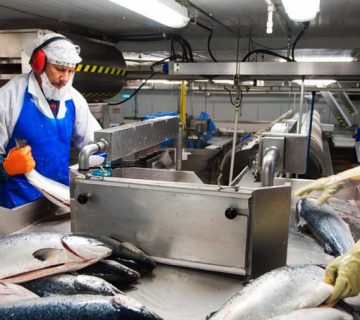
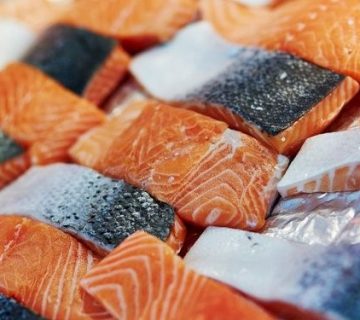
The uncertainty has also been experienced by salmon exporters, according to Annika Fredriksberg, sales manager at Bakkafrost. The Faroe Islands-based salmon farm has exported significant volumes to China in recent years.
“The logistics are very challenging. Destination ports are constantly closing and reopening. In some cases, cargo that arrives in Guangzhou is trucked to Beijing.”
China remains a strategic market for Bakafrost, with potential for further growth, says Fredericksberg. The company’s crown logo is well-known among Chinese customers, and anything associated with the royal family is popular with the growing middle class.
“Customers may not know the name of the company, but they want ‘salmon with the crown.’”
Although health inspections have disrupted the live seafood trade, China is still a strong market for frozen shellfish from the UK, says Alan Price, managing director of C&N Chambers. The company exports brown crab, scampi and snails from Kilkee, Northern Ireland, to buyers in China and Europe.
“Demand for imported seafood in gift boxes is strong in the market.”
Price said strong pricing in China had also put pressure on European buyers to compete. Brown crab prices have risen from $6.00 (€5.75) a kilo four years ago to $9.00 (€8.65) a kilo now. While he saw demand from China draw some of the product from Europe, buyers in Portugal are now willing to pay higher prices. The reopening of the tourism industry in Europe, particularly this year, has boosted demand for catering.
“Some of our customers in southern Europe supply frozen products to stores. Portugal is now willing to buy at higher prices; they couldn’t afford to do that in the past.”
Price had built up a long list of contacts in China in his previous job as a manager at his family-owned Rockbell Shellfish in Dublin. He says he has had no problems with Covid inspections on his produce, as his Chinese buyers are implementing isolation and quarantine procedures.
The strong pricing in China that Price and other sellers have seen is confirmed by data from Bord Iascaigh Mhara (BIM), Ireland’s seafood market development group. The BIM’s annual seafood trade report details a 20% year-on-year increase in prices for shellfish and crustaceans in 2021. The sharp rise in diesel fuel prices has also increased costs for seafood companies in Ireland. Fuel prices have risen by 150% since Russia’s invasion of Ukraine, according to BIM.